SAVIA was born in the field, in the offices where emergency responses are run, where every decision can save lives or leave others hanging. This page tells that story.
As a Social and Behaviour Change communication specialist, I built my career in some of the most complex humanitarian settings of the Sahel and the Lake Chad Basin. My commitment began in 2016 as a Gender consultant. Very soon, UNICEF posted me to Diffa, where the Lake Chad Basin crisis taught me everything: mass displacement, emergency responses, and contexts where connectivity goes off with the sun.
From 2019 to 2022, UNHCR called on me to strengthen its operations on forced displacement in the Sahel. In 2024, I returned to UNICEF with the same conviction: as humanitarians, we produce huge volumes of data, but we struggle to turn them into clear, fast and documented decisions at the moment lives depend on them.
Everywhere, I saw the same scene repeat itself: teams exhausted, overwhelmed by data, forced to decide quickly without ever really knowing whether they were deciding well. Officers spending their evenings copying and pasting tables into reports nobody had time to read.
One day, in a field office, a colleague told me: "We have all the data in the world. What we don't have is a clear answer." That sentence has never left me.
So I started building what I wished I had had. First an Excel sheet. Then an in-house tool. Then a real platform. Then SAVIA.
SAVIA, for System for Analytics, Visibility, Intelligence & Action, is the answer to one simple question: what do we do now?
Every stage of SAVIA's development was shaped by a lesson learned in the field.
First steps in humanitarian work as a consultant on gender issues. Discovering the inclusion, protection and community dynamics that would shape the rest of the journey.
Joins UNICEF in Diffa, at the heart of the Lake Chad Basin, a region facing a complex crisis. Intensive fieldwork with affected communities, internally displaced people and refugees. This is where the intuition behind SAVIA was born.
A new challenge at UNHCR on forced displacement in the Sahel. Another scale of complexity: multi-partner coordination, protection analysis, decisions under constant humanitarian pressure.
Growing expertise in communication with communities (CwC), accountability to affected populations (AAP) and emergency responses. The Excel tool developed alongside shows its limits in the face of complex data.
Back at UNICEF with a clear vision: experience in both agencies points to the same need, simple decision tools designed for the field that turn data into action.
After years of observation in the field, I lay the first foundations of HIOS (Humanitarian Information & Operations System). The ambition is radical: give field teams a tool that turns their raw data into documented decisions in under fifteen minutes a week.
A complete redesign and rebrand as SAVIA. A new identity and a new ambition: to become the global reference in decision intelligence for nexus professionals. 20 sector profiles, 4 languages, aligned with the five international standards.
A public API. A native mobile app. Advanced risk mapping. Partnerships with donors. The story is only beginning.
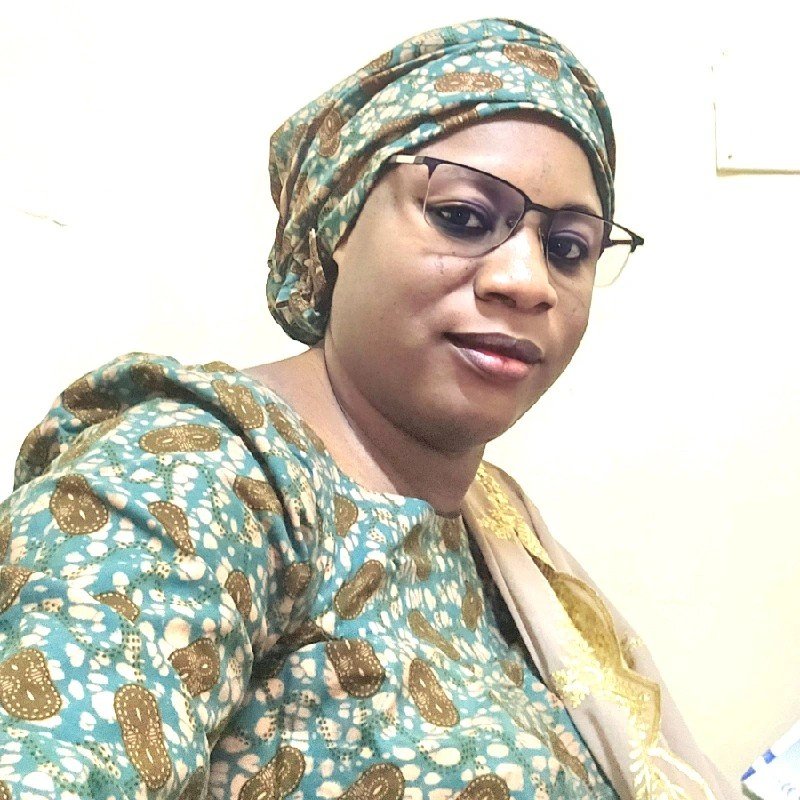
A Social and Behaviour Change communication specialist (SBC/RCCE), Ramatou has nearly ten years of humanitarian experience, since 2016.
Her humanitarian career began in 2016 as a Gender consultant, before taking off with UNICEF in Diffa, at the heart of the Lake Chad Basin. From 2019 to 2022, she joined UNHCR to strengthen operations on forced displacement in the Sahel. In 2024, she returned to UNICEF with a clear vision: to build the tools the humanitarian sector has been waiting for too long.
Based in Niamey, she now leads the development of SAVIA, convinced that the best humanitarian solutions come from those who have known the field. She is also a co-founder of the NGO HIRA (Humanitarian, Innovation, Research & Analysis), currently being established in Niger, which will carry this mission further in the field.
SAVIA is not just a technical tool. It is the concrete expression of four deep convictions about what technology serving humanitarian work should be.
A humanitarian should never have to choose between understanding their data and acting quickly. SAVIA rejects unusable dashboards and 40-page reports. Every screen answers one simple question.
We do not collect data for the sake of it. We turn figures into answers: what is happening? Is it urgent? What do we do now? Anything that does not serve the decision is left out.
We do not build to impress developers. We build for the sub-office head who has to send a sitrep in 30 minutes, for the officer with no data training, for the field.
The quality of your tools should never depend on the size of your budget. SAVIA stays free for individual practitioners and offers an Essential tier calibrated for national NGOs and organisations with tight budgets. Always.
SAVIA is built with and for the humanitarian community. Try it. Comment on it. Challenge it. Help us make it the global reference.
Get started with SAVIA